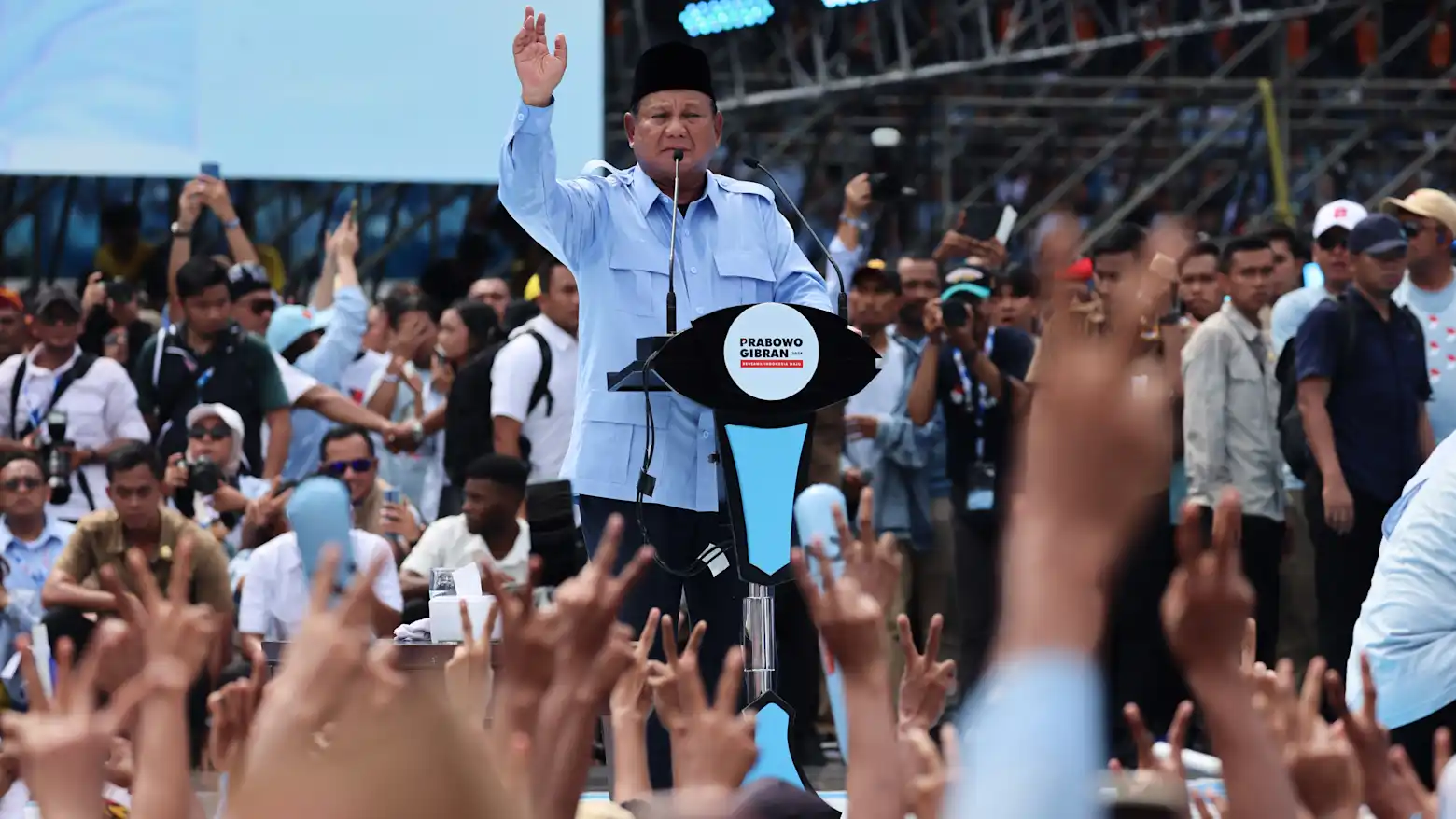
Indonesian President Prabowo Subianto's public standing appears to be weakening, with two recent opinion polls showing his approval ratings in decline, according to a Nikkei Asia report. Perhaps more striking than the drop itself is what one of those polls found sitting alongside it, that the governor of West Java is now significantly more popular than the president himself. For a leader who won office decisively, that is the kind of finding that tends to get noticed well before any campaign officially begins.
Nikkei's reporting ties the decline to a combination of a lackluster economy and friction around some of Prabowo's own flagship initiatives, including his signature free meal program and a village level cooperative drive meant to anchor his economic agenda at the grassroots. Both programs were designed to be visible, tangible wins for ordinary Indonesians. When programs built to showcase a leader's priorities instead become a source of criticism, the political cost tends to be sharper than an ordinary policy misstep.
Why a governor's popularity matters this early
Indonesia's next presidential election is not until 2029, which makes the timing of this polling notable. Provincial governors do not automatically become national contenders, but a genuinely popular one, especially one already outperforming a sitting president in surveys, becomes an obvious name for opposition figures, party strategists, and political commentators to start floating well ahead of schedule. Early polling like this rarely decides anything on its own, but it does shape which names get taken seriously once the real positioning begins.
An economy doing the president few favors
Sluggish growth has a way of dragging down approval ratings regardless of what else a government is doing right, and Prabowo's numbers appear to be no exception. Reports of power supply challenges add another layer of everyday frustration that voters tend to notice directly, since interruptions to something as basic as electricity translate quickly into public irritation in a way that abstract economic statistics often do not.
What it means for the region
Indonesia is Southeast Asia's largest economy, so shifts in its domestic political mood carry weight well beyond its own borders. Investors and regional governments alike tend to watch Indonesian political stability closely, since policy continuity, or the lack of it, shapes everything from trade relationships to investment flows across the region. A president facing an earlier than expected popularity problem, even years before the next vote, is the kind of signal that tends to keep foreign observers paying closer attention to Jakarta than they otherwise might.
The bottom line
Three years is a long time in politics, and plenty could change before Indonesians next go to the polls in 2029. But the emergence of a clearly more popular rival this early, paired with strain around the president's own signature programs, is exactly the kind of combination that tends to reshape a political landscape well before the campaign officially starts. Whether Prabowo can turn his numbers around, or whether this is the first visible crack in his standing, is likely to be a story Indonesia watchers keep returning to long before ballots are ever cast.