Gold's Pullback Amid Middle East Conflict Tests — and Reinforces — Its Safe-Haven Appeal
Gold has behaved in an unexpected way during the latest flare-up in the Middle East. Rather than surging on the escalation, bullion traded below $4,100 an ounce this week after falling for a second s…
Gold's Pullback Amid Middle East Conflict Tests — and Reinforces — Its Safe-Haven Appeal
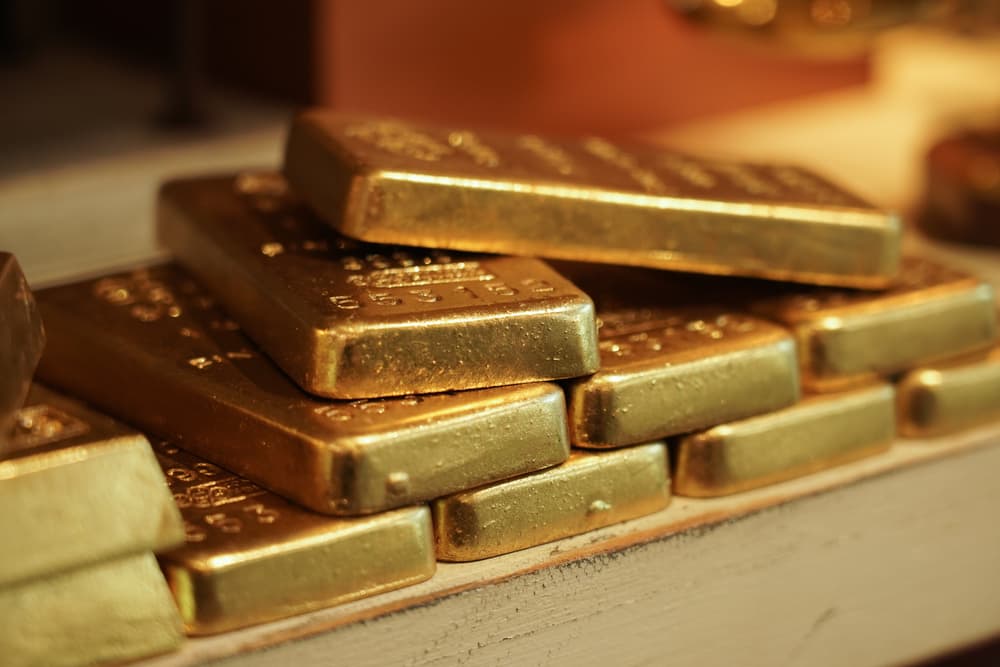
Gold has behaved in an unexpected way during the latest flare-up in the Middle East. Rather than surging on the escalation, bullion traded below $4,100 an ounce this week after falling for a second straight session, weighed down by concerns that renewed conflict in the region could disrupt energy supplies and intensify inflationary pressures. The U.S. military said it launched fresh strikes on Iran to keep the Strait of Hormuz open to shipping, triggering Iranian attacks on Kuwait and Bahrain, and oil prices jumped more than 5% after President Trump said the deal aimed at ending the conflict with Iran was over.
The mechanism behind the dip is monetary rather than geopolitical. Higher oil prices feed inflation expectations, which in turn raise the odds of tighter central bank policy — a headwind for an asset that pays no yield. Kelvin Wong, a senior market analyst at OANDA, said the downside pressure reflects markets repricing the chance of another Federal Reserve rate hike as early as the first quarter of next year. Traders now see a 68% chance of a hike in September and an 87% chance of an increase by January 2027, according to the CME FedWatch tool.
Yet for many investors, that weakness is precisely the attraction. Phan Quoc Cong, chief executive of Vietnamese jeweler Phu Nhuan Jewelry (PNJ), told CNBC that the recent dip in gold prices amid the Middle East tensions has created new investment opportunities for investors in Vietnam — a market where physical gold has long served as a household store of value. His comments capture a view held well beyond Vietnam: that short-term rate-driven pullbacks in gold are entry points within a longer structural uptrend.
The structural case rests heavily on official-sector demand. China's central bank extended its gold purchases for a 20th consecutive month, lifting reserves to 75.44 million fine troy ounces by the end of June, and reported its largest monthly increase in gold reserves in more than two and a half years in June, underscoring continued official-sector demand. Even after the recent slide, gold remains at historically elevated levels — a fraction below records set earlier this year — and forecasts diverge widely: Bank of America trimmed its 2026 average forecast by 14% to $4,360 an ounce, citing a more hawkish Fed, while J.P. Morgan has projected prices could reach $6,300 by year-end, driven by central bank buying and investor demand.
The retirement angle: gold IRAs
In the United States, one of the clearest expressions of this safe-haven demand has been the growth of the gold IRA — a self-directed individual retirement account that allows investors to hold IRS-approved physical gold, silver, platinum and palladium, typically funded through rollovers from existing 401(k)s or traditional IRAs. Ongoing tensions in the Middle East, concerns around U.S.-Iran relations, trade friction and doubts about currency stability have pushed investors toward the structure as a hedge, and retirees are moving large 401(k) balances into physical metals.
A cluster of specialist dealers serves this market. Augusta Precious Metals is among the most frequently cited, known for an education-first approach that emphasizes one-on-one guidance and helping customers understand how precious metals IRAs, rollovers and eligible metals work before they commit. Competitors occupy similar ground: Goldco is recognized for rollover support and 401(k) transfer expertise, Noble Gold for a simplified onboarding process suited to first-time metals investors, and Birch Gold Group for its educational approach and broad metals selection, while Lear Capital is noted for its long operating history and emphasis on written pricing documentation. Independent rankings disagree on which firm leads — different 2026 industry reviews have placed Augusta and Goldco each at the top — which itself suggests investors should compare rather than default to any single name.
The category also carries real costs that a falling gold price can obscure. First-year costs of a gold IRA range from roughly 3.5% to over 13% depending on the provider, and investors buying exclusive or graded proof coins face average markups from 35% to over 130% above melt value. Analysts note that excessive spreads and misunderstood custodial arrangements — not falling gold prices — account for the bulk of losses in many accounts. Setup fees, annual custodian fees, storage fees and dealer spreads all apply, and a reputable company should explain them clearly before an account is funded. Industry writers also caution investors to avoid firms that lean on fear, urgency or guaranteed-return claims.
Whether the current dip proves to be the opportunity Cong describes will depend largely on the Fed's path and how long the Middle East conflict keeps inflation expectations elevated. What the episode has already demonstrated is that gold demand — from central banks to Vietnamese households to American retirement savers — has become structural enough that price weakness is now read by many as an invitation rather than a warning.
The Singapore state investor plans to lift its AI related holdings to about 15 percent of its portfolio by 2031, up from 6 percent today, after its net assets climbed to a record 518 billion Singapore dollars.
Japan's largest bank and its home grown card network are teaming up to sell exclusive dining, booking and concierge perks in Japan to affluent customers in Indonesia, Thailand and beyond, chasing one of the region's fastest growing pools of money.
Indonesian digital bank Superbank is leaning on its integration with ride hailing giant Grab and unusually competitive deposit rates to pull in savers, even as CEO Tigor Siahaan warns that a crowded digital banking market is headed for serious consolidation.
Fox Tungsten is fully cashed up for their ongoing drilling program, is in possession of a standout asset, and has considerable long-term value in a critical market. And make no mistake, folks – FOXT…
A new Deloitte forecast projects Asia Pacific's financial services industry will generate 4.8 trillion dollars in economic value by 2035, overtaking the United States, with China expected to lead the region on both scale and innovation as its economy and household wealth keep expanding.