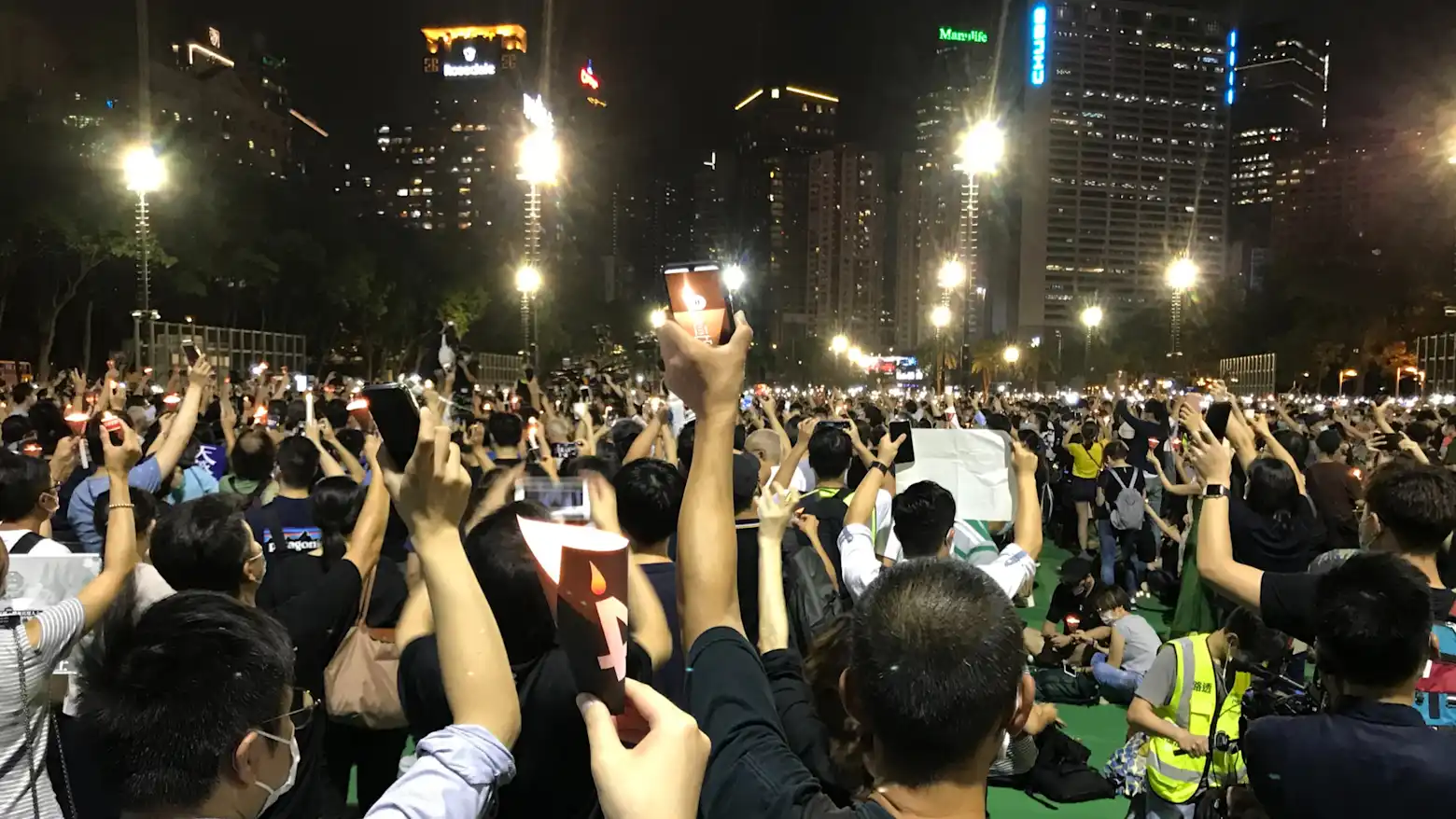
Hong Kong authorities have secured convictions against organizers of the city's long-running Tiananmen Square vigil on charges of inciting subversion, according to Nikkei Asia. The ruling marks another milestone in the years-long dismantling of the annual June 4 commemoration, once the largest public memorial of its kind anywhere in the world, and adds to a growing body of national security law cases that have reshaped Hong Kong's political and civic landscape since Beijing imposed the legislation in 2020.
For decades, Hong Kong's Victoria Park vigil drew tens of thousands of participants each year to mourn victims of the 1989 crackdown in Beijing, a commemoration that was tolerated nowhere else on Chinese soil. The event became a symbol of the "one country, two systems" framework that was meant to preserve civil liberties in the former British colony after its 1997 handover to China. Its organizers, often linked to the Hong Kong Alliance in Support of Patriotic Democratic Movements of China, had already faced mounting pressure in recent years, including the group's forced disbandment and the arrest of several of its leading figures.
The latest convictions, reported by Nikkei Asia, underscore how Hong Kong's judiciary continues to apply the national security law broadly, treating organized commemoration of a politically sensitive historical event as a potential threat to state power. Legal observers have noted that the law's provisions on incitement to subversion carry a low evidentiary bar and heavy potential sentences, a combination that has chilled not only political activism but also broader civil society organizing in the city.
While the case centers on political rather than economic activity, it carries implications that extend well beyond Hong Kong's courtrooms and into boardrooms across the region. Hong Kong has long marketed itself as Asia's premier international financial center, a status built in part on the perception of a stable, rules-based legal system distinct from mainland China's. Convictions tied to peaceful assembly and free expression feed into a narrative, increasingly voiced by multinational firms and foreign chambers of commerce, that the line between Hong Kong's legal system and Beijing's political priorities has blurred.
That perception matters directly to Southeast Asian markets and investors, many of whom have historically used Hong Kong as a gateway for capital flows into and out of mainland China. Singapore has been a chief beneficiary of any erosion in confidence in Hong Kong, absorbing family offices, fund managers, and corporate treasury functions that have relocated or diversified their regional headquarters over the past several years. Analysts tracking capital flows in the region have pointed to Hong Kong's tightening political climate, alongside stricter capital controls and geopolitical tensions between Washington and Beijing, as factors accelerating this shift.
Indonesia, too, has sought to position itself as an alternative destination for regional financial activity, courting sovereign wealth funds and multinational investors through initiatives such as the Indonesia Investment Authority and reforms aimed at improving ease of doing business. While Jakarta's ambitions remain modest compared with Singapore's established financial infrastructure, any sustained erosion of confidence in Hong Kong's institutional independence could marginally benefit Southeast Asian markets seeking to attract capital and talent displaced by uncertainty.