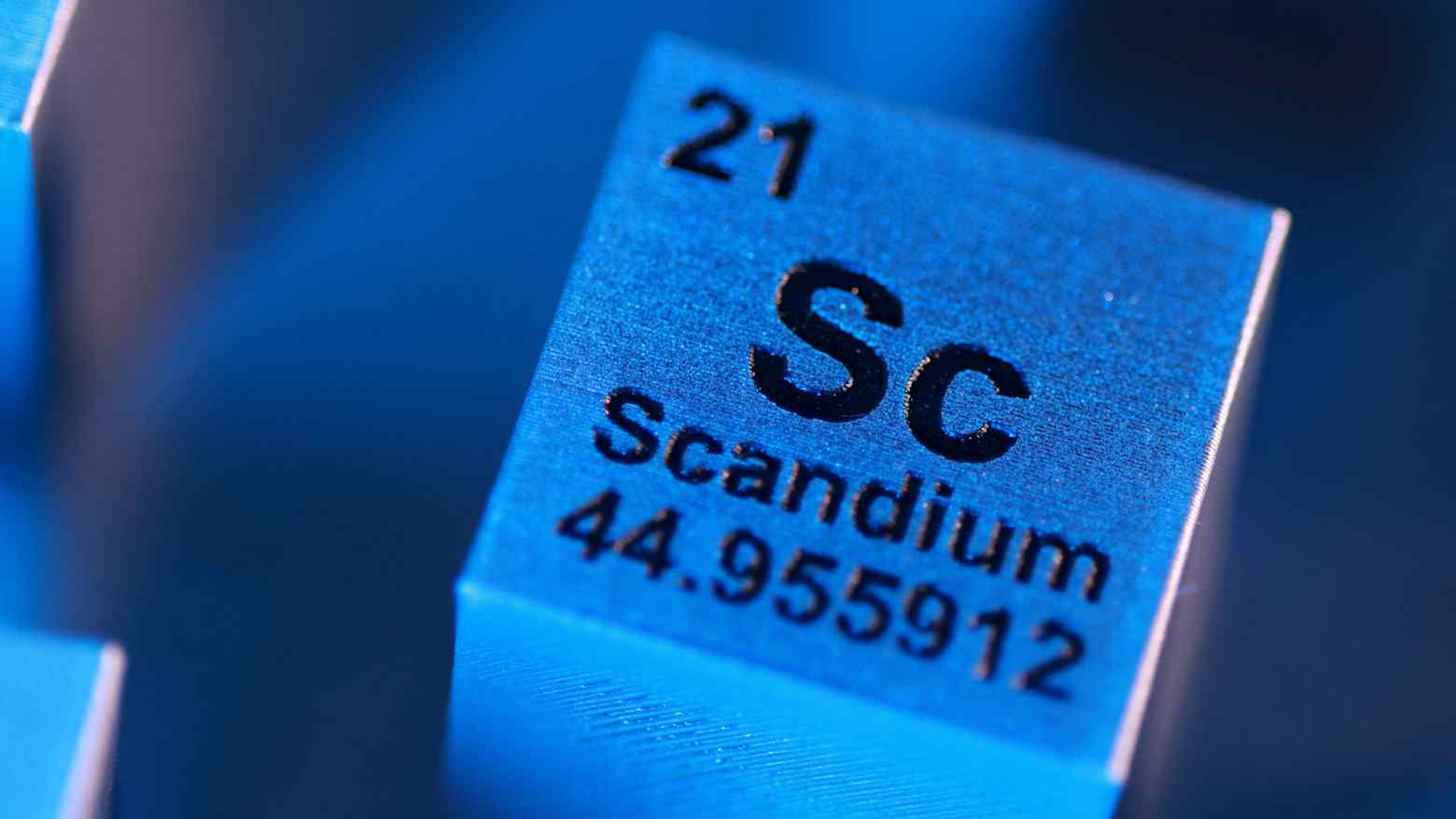
Sunrise Energy Metals, an Australian company developing a scandium project, saw its share price surge about 20 percent in early trading after it emerged as one of the potential recipients of United States support for critical mineral projects. The jump is small in absolute terms but large in signal, another sign that the contest over the obscure metals underpinning modern technology and defense has moved from policy papers to balance sheets.
Scandium is not a household name, yet it sits at the awkward intersection of technology and security. Grouped among the rare earth elements, it is used in solid oxide fuel cells, in the high strength alloys that go into defense and aerospace equipment, and in the chips that power wireless communication. That combination of civilian and military uses is precisely what makes governments nervous when the supply is concentrated in a single country's hands.
Why the metal suddenly matters
The trigger is China. Scandium and the wider basket of critical minerals have become harder to source as Chinese restrictions tighten, leaving chipmakers and defense firms scrambling for alternatives. When the dominant supplier of a strategic input turns the flow up or down at will, every downstream manufacturer that depends on it inherits a vulnerability it did not choose, and the only durable fix is to build supply somewhere else.
That is the gap Washington is trying to fill. By putting government weight behind projects like Sunrise's, the United States is attempting to seed a non Chinese supply chain for materials it has decided it cannot afford to import on trust. The support matters less as a subsidy than as a signal, because a project blessed by the United States becomes easier to finance, easier to sign customers to, and more likely to actually reach production, which is where most mining ambitions quietly die.
Australia's comfortable position
For Australia, this is a familiar and profitable role. The country has abundant mineral endowments, a stable legal system, and a long standing security alignment with the United States, which together make it the natural place for Western governments to look when they want raw materials sourced outside China. Scandium joins a growing list of critical minerals where Australian miners are being courted as the reliable alternative, and the market is rewarding the ones that land official backing.
The caution is that a mining share reacting to a place on a list of candidates is reacting to a promise, not a shipment. Turning a scandium resource into steady commercial output is slow, capital hungry work, and government interest at the study stage does not guarantee a mine at the end of it. Investors who chased the 20 percent move are betting that the geopolitics will keep the support and the customers coming, and that bet still has to survive the years of construction in between.
The read from Southeast Asia
The episode is a preview of a dynamic that runs directly through Southeast Asia, a region rich in exactly the kind of minerals the world is now fighting over. Indonesia's nickel, along with cobalt, tin, and rare earths scattered across the region, sits in the same strategic category as Australian scandium, and the same great power competition that is steering United States money toward Canberra will increasingly shape who finances and who buys Southeast Asian output.
That creates both leverage and pressure. Resource holders in the region can command better terms as buyers seek supply outside China, but they will also face growing demands to choose a side, aligning their processing and their exports with one bloc or another. The Sunrise story shows the reward on offer for miners that position themselves as the trusted alternative. For Southeast Asian governments sitting on critical minerals of their own, the harder question is how much independence they are willing to trade for that reward, and to whom.