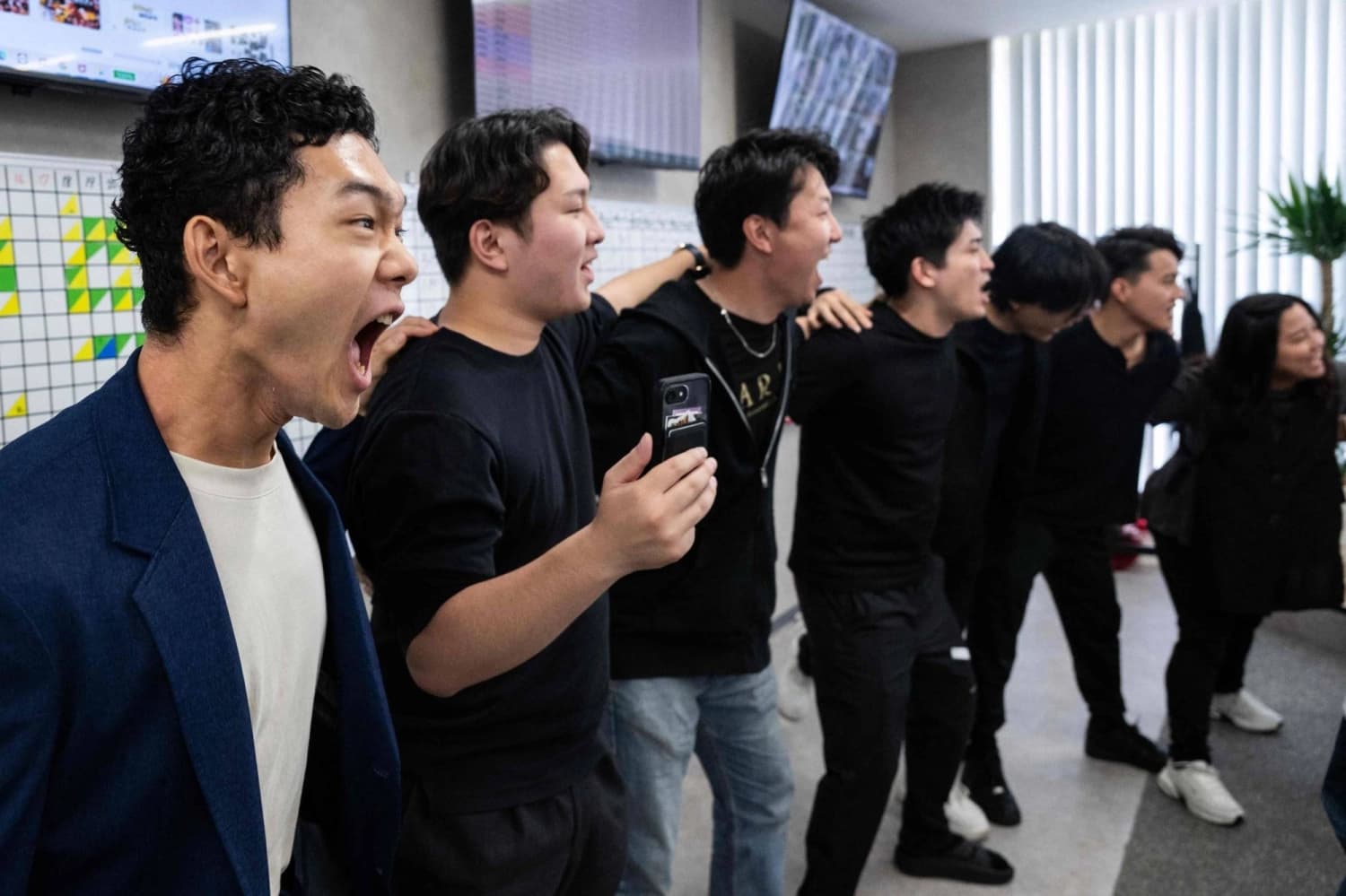
Every morning at Global Partners, a business support firm in Tokyo, employees gather in a tight circle, sway together, and shout sales targets at the top of their lungs until their voices crack. Someone is picked at random to fire up the room. The hires doing the shouting are mostly in their twenties, and they are reaching back on purpose for the aggressive drive that powered Japan's post-war boom, a style their parents' generation spent decades trying to soften.
The company, known as GP, has turned that ritual into an internet spectacle. It posts clips of its high-voltage morning rallies and of staff being dressed down by managers, and the reaction online has been split between fascination and alarm, with some viewers calling the culture cult-like and others calling it sadistic. What makes the story more than a curiosity is who is volunteering for it, and why they say the softer workplace they grew up expecting left them cold.
The workers who asked to be pushed harder
Kotaro Kawabata, 26, keeps a row of motivational sticky notes on his monitor, one of which crowns him the top salesman on the team. He says the intensity is the point, that being corrected sharply and even shouted at is how he grows, and that he loves the way the office snaps into motion the moment the day begins. Asuka Obri Okabe, 28, describes the scoldings as a kind of affection, and says the truly frightening workplace is the one where nobody ever tells you that you are heading in the wrong direction.
That instinct runs against the direction Japan has traveled for years. A 2023 survey by the Recruit Works Institute found that 64 percent of middle managers now scold their subordinates no more than a few times a year. The retreat from tough love was deliberate, and it had a grim catalyst, the 2015 death of an exhausted 24 year old employee at the advertising giant Dentsu, which forced corporate Japan to confront karoshi, the phenomenon of working oneself to death.
Why a low-pressure office did not fix everything
Shoto Furuya, chief researcher at the institute, frames GP as a reminder of something the country traded away. The era of tough love and offices built around a homogeneous core of male full-timers is over, he says, and a rapidly aging population has made Japan dependent on a far wider range of workers, including many who simply do not treat their job as the center of their lives. That shift was necessary. It was also, for a certain kind of ambitious young worker, deflating.
The evidence of that deflation is not anecdotal. A recent survey by the job-matching service Mynavi found that half of Japanese workers in their twenties and thirties say they have mentally checked out of their jobs. Furuya argues that the calm, low-pressure model was never the right fit for everyone, and that some of the most driven young people have started quitting in frustration, hungry for the gung-ho, sports-team energy that companies like GP are now selling back to them.