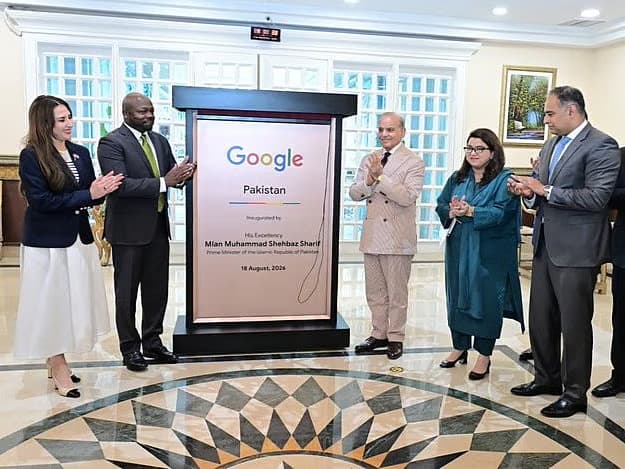
Google has formally opened its first country office in Pakistan, a move that on paper looks like routine expansion for a company already present in nearly every corner of the globe. What makes it notable is the gap between how Google is explaining the decision and how people close to Pakistan's tech industry are reading it. A Google vice president based in Singapore framed the office as a way to help Pakistan reach its ambitious 30 billion dollar IT export target. Industry insiders quoted alongside that explanation see something else entirely, a company positioning itself early in a local digital market that is still small but growing.
That skepticism is not baseless. Until now, Google's presence in Pakistan has largely meant advertising revenue flowing through its platforms rather than any dedicated local operation. A formal office signals something more deliberate, a bet that Pakistan's internet economy is worth investing real people and infrastructure in, not just serving remotely from elsewhere in the region.
Two stories, one office
The export framing makes political sense. Pakistan has been pushing hard to grow its IT export sector, and a household name like Google publicly backing that goal is a useful headline for a government eager to show progress. But exports and domestic market share are different games, and a company the size of Google rarely opens a formal office purely to cheerlead someone else's target. The more common playbook is to plant a flag in a market before local or regional competitors lock down the best partnerships, talent, and government relationships.
A workforce already exposed to disruption
The timing carries its own irony. Pakistan's gig economy, much of it built around freelance and outsourced digital work, has been heading toward record export earnings, yet that same sector is increasingly exposed to the same AI tools that companies like Google are racing to build and sell. A stronger Google presence could mean more opportunity for Pakistani developers and businesses, or it could mean more competitive pressure on exactly the kind of freelance digital work the country has been counting on to hit its export goals.
The bigger geopolitical backdrop
Google's move also lands inside a broader contest over who builds and controls Pakistan's digital infrastructure. China backed data centers already operating in the country have raised concerns about digital sovereignty, and a large American technology company setting up a formal presence adds another layer to that competition. The context is sharpened further by talks around a potential 10 billion dollar US foreign exchange facility for Pakistan, a reminder that Washington's economic and technological interest in the country tends to move together rather than separately.
What it means for the region
Southeast Asian markets have already lived through this pattern, watching Google and its peers open offices, court local partners, and gradually deepen their footprint well beyond advertising. Pakistan's formal entry adds one more data point to how the company expands into markets it sees as underdeveloped relative to their long term potential. Whether the stated export mission or the market opportunity theory turns out to be the real driver, the practical effect is the same, a bigger, more permanent Google presence in a market that did not have one before.