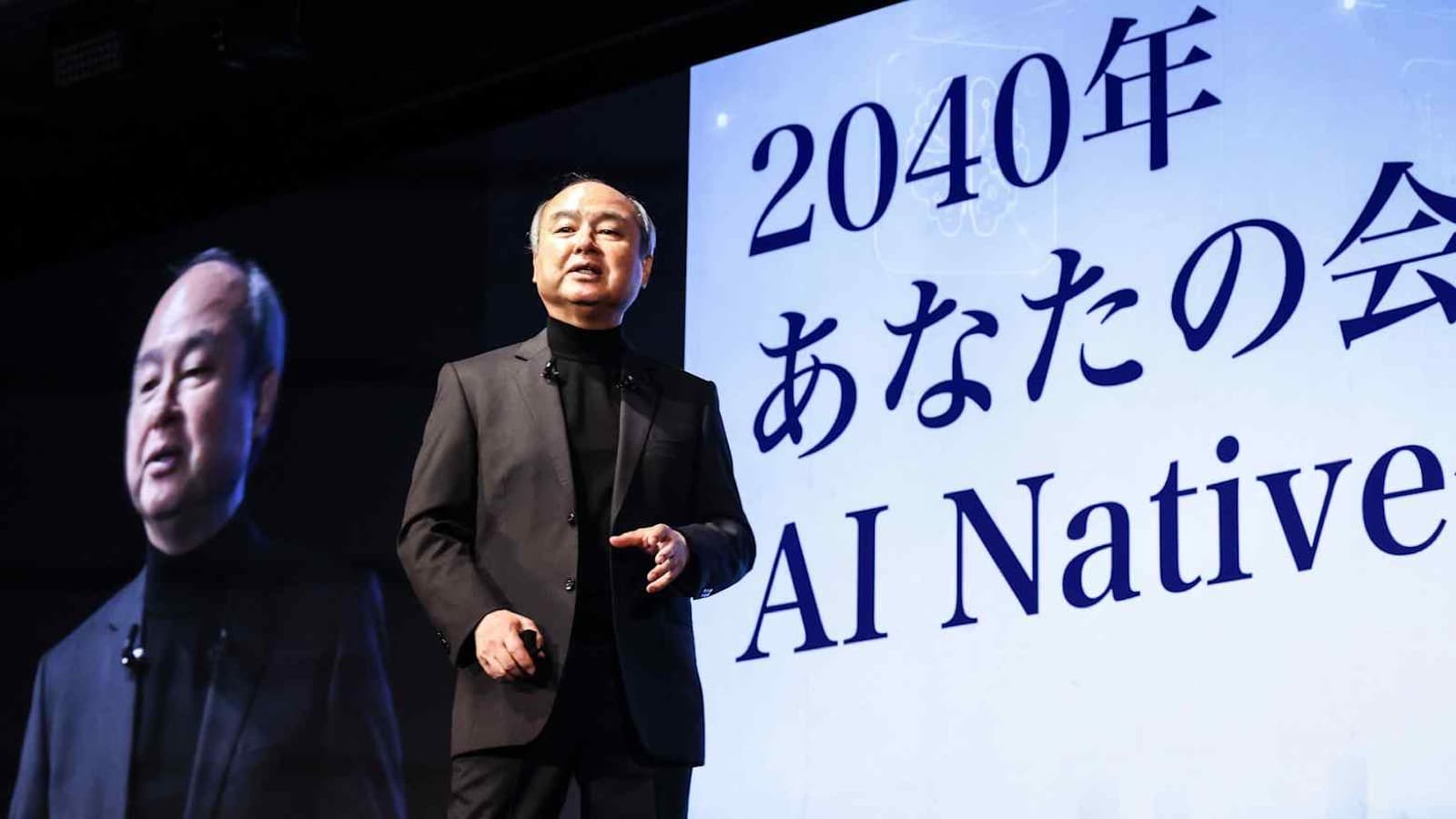
Masayoshi Son, the founder of SoftBank Group, has made one of his boldest predictions yet about the scale of the artificial intelligence boom, telling a conference in Tokyo that the world will need to spend 5 trillion dollars every year on AI infrastructure by 2040. Speaking at the company's annual SoftBank World event, he cast the figure not as a wild guess but as a near certainty.
The sum, equal to about 800 trillion yen, would go toward the physical backbone of the AI era, the data centres, power plants and humanoid robots that Son argues will underpin a world where machines do far more of the work now done by people. He acknowledged the number sounds unbelievable, but insisted he is confident that is roughly what it will cost.
Waving away the bubble
To the growing chorus warning that AI has become a speculative bubble, Son offered a blunt rebuttal. He called such talk absurd, arguing that the spending only looks extreme when stripped of context. If AI accounts for a fifth of global economic output by 2040, as he expects, then pouring hundreds of trillions of yen into it each year amounts to little more than a rounding error against the value it creates.
It is a familiar posture for Son, a serial maker of grand forecasts whose record swings between spectacular wins and painful misses. This time he is staking SoftBank's future on the conviction that AI is not a passing mania but the foundation of the next economy.
A world run by agents
Son went further than infrastructure, sketching a future in which the balance between humans and machines fundamentally shifts. By 2040, he said, some 100 trillion AI agents will be making their own decisions, acting on them and talking to one another, moving the world from a human centred order to an agent centred one. In his telling, the era in which humans sit as the highest form of life on earth is coming to an end.
Whether or not that vision arrives on schedule, it explains why Son is willing to commit sums that dwarf almost any corporate bet in history. He sees AI not as one industry among many but as the platform on which every other industry will run.
Betting the company on AI
Son is not merely forecasting the boom, he is trying to finance it. He chairs Stargate, a 500 billion dollar effort to build out AI data centres in the United States alongside Oracle, OpenAI and Abu Dhabi's MGX. SoftBank's largest single conviction is OpenAI itself, the maker of ChatGPT, where the group's cumulative investment is on course to pass 60 billion dollars before the end of 2026.
Those commitments make Son one of the most aggressive backers of the AI build out anywhere, and they leave SoftBank deeply exposed should his timeline prove too optimistic. For now, though, the man who bet early on the internet and later on chips is wagering that the biggest returns of his career still lie ahead, in a decade he insists will be defined by machines that think.