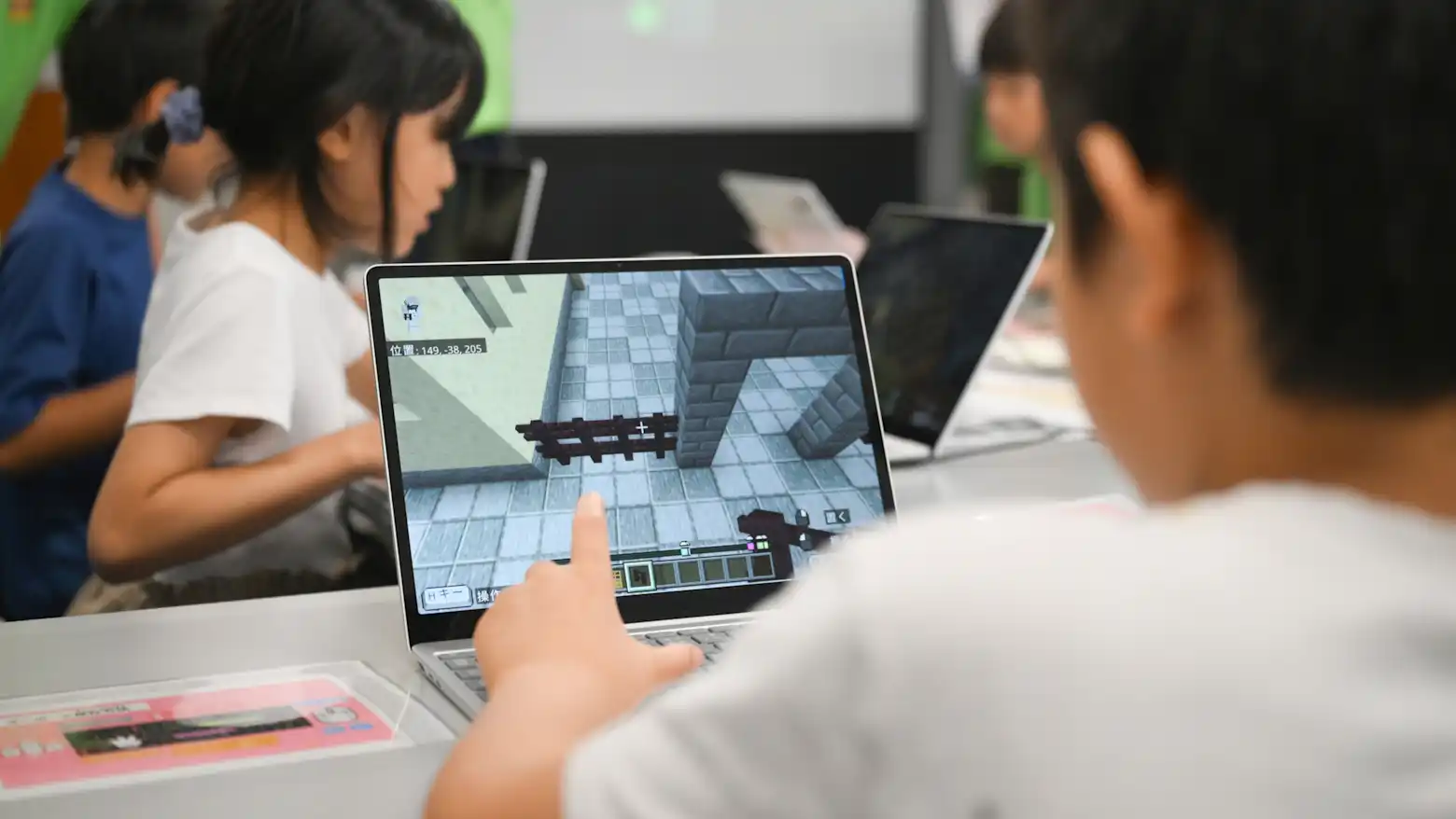
As the generation that lived through World War Two grows smaller each year, Japanese educators are reaching for an unusual tool to keep that history from fading with them, a video game most students already know well. Schoolchildren have been recreating the prewar streetscape of Tokyo's Bunkyo ward inside Minecraft, block by block rebuilding a neighborhood exactly as it looked before incendiary bombs reduced it to ruins during the Great Tokyo Air Raid in 1945.
The exercise flips the usual direction of history education. Instead of reading about a bombing raid in a textbook and trying to picture what was lost, students construct the loss themselves, laying down the same streets, buildings, and layout that existed before the destruction so they understand exactly what disappeared and why it mattered. Building a place forces a kind of attention that reading about it rarely does, since every wall and street corner has to be researched and placed deliberately rather than absorbed passively.
Why a video game, and why now
The choice of Minecraft is not incidental. It is a platform already familiar to children worldwide, built entirely around placing and shaping blocks, which makes it a natural fit for reconstructing a lost cityscape without requiring specialized software or technical training most schools could never provide. Using a tool students already enjoy also lowers the barrier between a heavy historical subject and a young audience that might otherwise find a lecture about wartime destruction abstract or distant.
A race against fading memory
The urgency behind projects like this is straightforward. Direct witnesses to the 1945 air raids are dying, and with them goes firsthand testimony that no textbook or documentary can fully replace. Educators turning to interactive tools like Minecraft are trying to solve a hard problem, how to make a historical event feel real and specific to a generation with no living connection to it, rather than letting it flatten into a date and a casualty count.
What the Great Tokyo Air Raid actually was
The raid being recreated was one of the most devastating bombing campaigns of the Pacific War, an incendiary attack on Tokyo in 1945 that destroyed huge swaths of the city, including the Bunkyo ward neighborhood students are now rebuilding virtually. The scale of destruction it caused is part of why the loss of firsthand memory matters so much, since an event that reshaped an entire city risks becoming just another line in a history syllabus once no one is left who actually lived through it.
A model with reach beyond Japan
The approach carries an obvious lesson for classrooms well beyond Tokyo. Southeast Asia has its own complicated wartime history from the same conflict, and a generation of students there faces the identical challenge of learning about events with fewer and fewer living witnesses left to describe them. A tool that turns history into something students build with their own hands, rather than something they are simply told about, offers a template that could travel far beyond one Tokyo neighborhood and one school project.