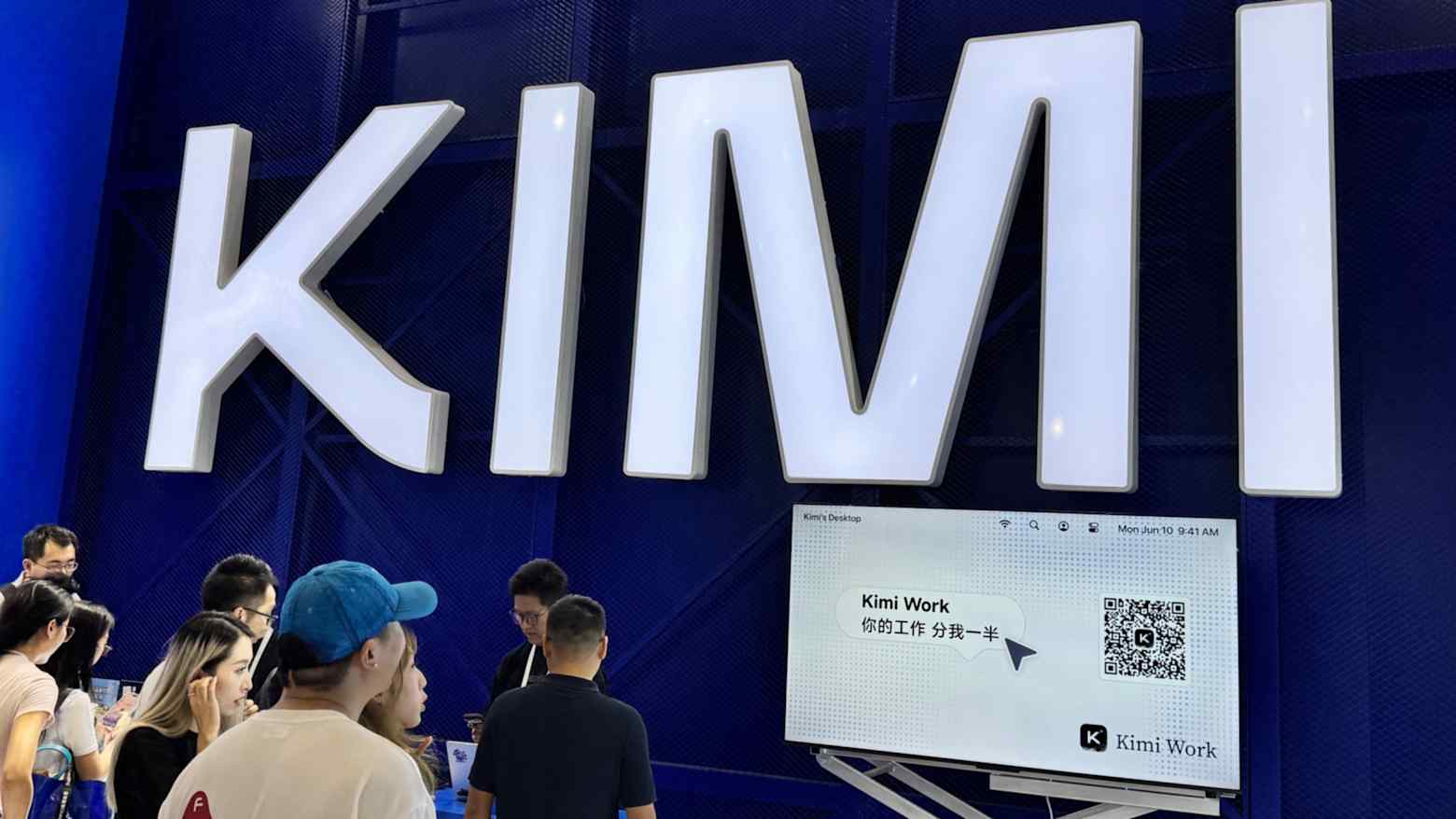
Moonshot AI, the Beijing startup behind the Kimi assistant, has released a model that its own benchmark tables place within touching distance of the strongest systems built in the United States. Kimi K3 arrived on July 16 with 2.8 trillion parameters, making it the largest model whose weights the company intends to publish, and it landed at a price that makes the comparison uncomfortable for its American rivals.
The headline is not that a Chinese laboratory has caught up. It is that the gap has narrowed enough for cost to become the deciding factor. On independent evaluations run by Artificial Analysis, K3 sits third overall, behind Claude Fable 5 Max and GPT-5.6 Sol Max but ahead of Claude Opus 4.8. On Arena's blind frontend coding test, where developers judge output without knowing which model produced it, K3 came first.
The price is the product
Moonshot charges 3 dollars per million input tokens and 15 dollars per million output tokens, with cached input at 30 cents. Measured the way buyers actually experience it, as cost per completed task, Artificial Analysis puts K3 at about 94 cents against 1 dollar 80 for Claude Opus 4.8. That is close to half price for work that lands in the same quality band.
Part of that efficiency is architectural. K3 activates only 16 of its 896 experts on any given token, roughly 1.8 percent of the total pool, so the compute burned per request is a small fraction of what the parameter count suggests. The company also says the model reasons more economically than its predecessor, using about a fifth fewer output tokens to reach an answer.
It is worth noting what the pricing is not. At 3 and 15 dollars, K3 costs far more than Moonshot's own K2.6, which ran at 95 cents and 4 dollars. The company has moved upmarket rather than racing to the bottom. The pitch is no longer that Chinese models are cheap, it is that they are competitive at a discount.
Why this matters from Jakarta to Ho Chi Minh City
For Southeast Asian businesses, frontier AI has largely been a line item that did not survive the budget meeting. Banks, logistics operators, and e-commerce platforms across the region have run pilots on premium American models, watched the token bill scale with usage, and quietly scoped the project down to something narrower. A model that performs in the same tier for roughly half the cost per task changes which pilots make it to production.
The promised weight release matters even more. Moonshot has committed to publishing K3's open weights by July 27, which would let companies host the model themselves. For institutions bound by data residency rules, that is the difference between an interesting demo and a deployable system. Regulators in Indonesia, Vietnam, and Singapore have grown steadily firmer about where customer data may travel, and self-hosting sidesteps the question entirely.