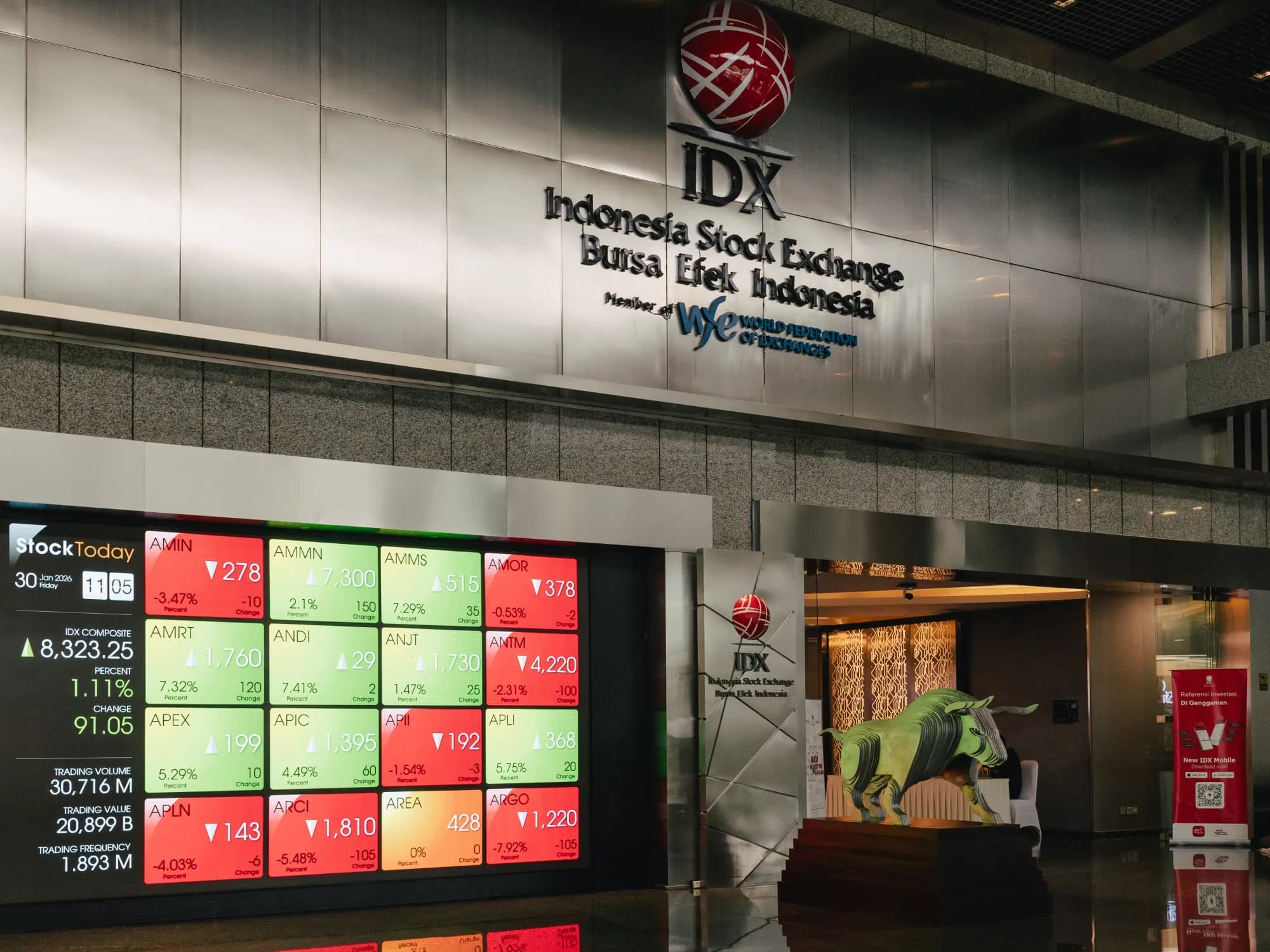
The Jakarta Composite Index fell 11.57% on October 16, its worst single-day decline since January 1998, after MSCI floated a proposal to reclassify Indonesia out of emerging-market status entirely. The move caught much of the market off guard not just for its timing but for its severity: rather than easing Indonesia down a single rung to frontier-market status, MSCI is weighing a double downgrade straight to standalone-market classification, a tier reserved for markets index providers consider too illiquid or opaque to group with other developing economies.
A selloff severe enough to halt trading
The scale of the drop was enough to trigger a circuit breaker, pausing trading on the exchange for 30 minutes as the index tumbled. A halt of that kind is a rare occurrence even during volatile stretches, underscoring how unprepared much of the market was for MSCI to act on concerns that had, by most accounts, been building quietly for months rather than emerging without warning.
What MSCI is actually objecting to
The specific concerns behind the proposal center on investability rather than economic fundamentals: persistent opacity around shareholding structures in listed companies, and suspected coordinated trading behavior that has made index providers and foreign fund managers increasingly uneasy about whether prices on the exchange reflect genuine market activity. Those are structural, governance-level complaints, the kind that tend to take longer to fix than a single earnings cycle or policy announcement, which is part of why the proposal rattled markets as hard as it did.