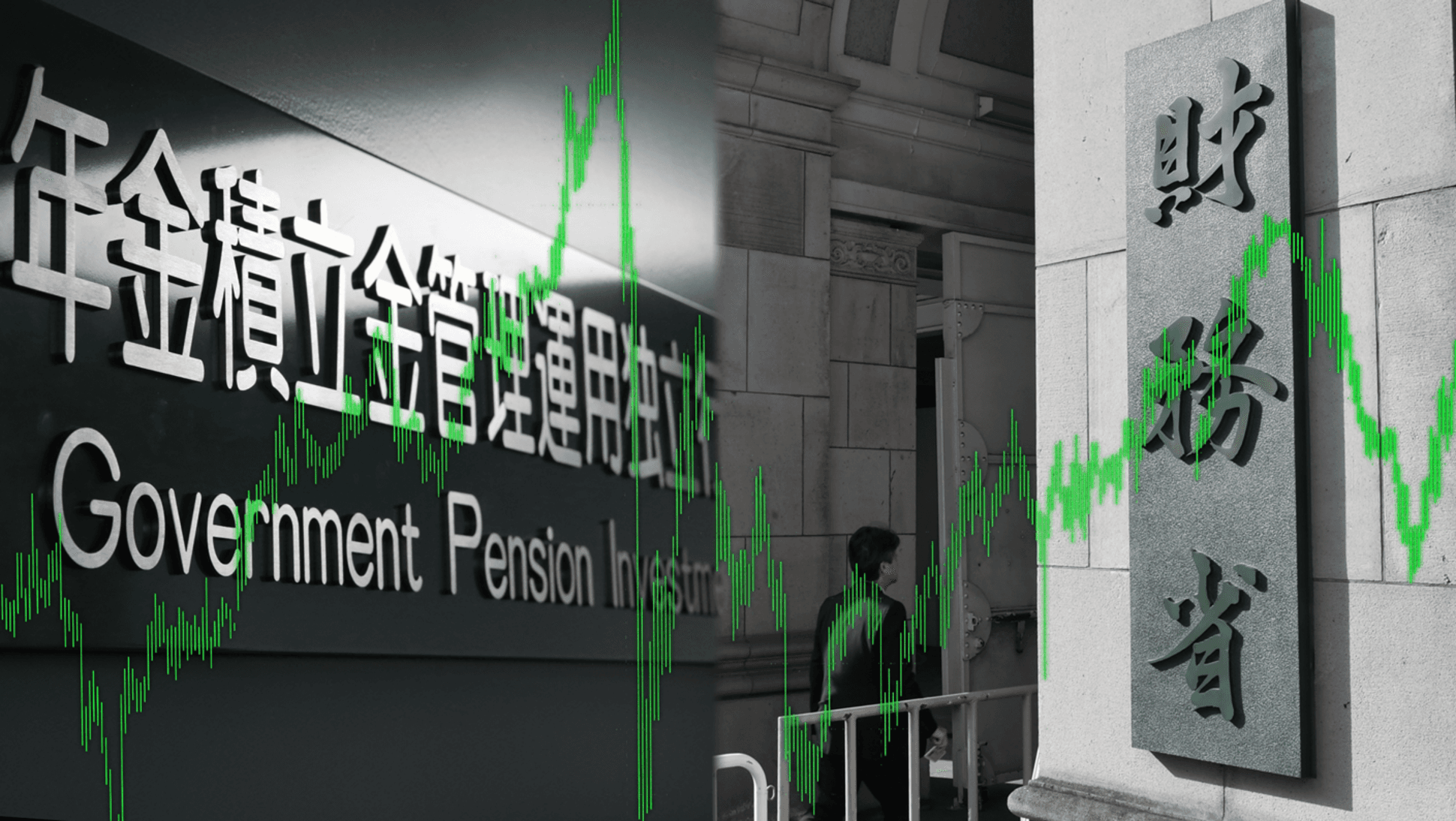
The Government Pension Investment Fund manages 293.4 trillion yen, about 1.8 trillion dollars, on behalf of Japanese retirees. It is the largest pool of pension money on the planet. In mid July it did nothing unusual, made no new purchase, and announced no change to its strategy. Yet it moved the market anyway, because Japan's finance minister suggested that one day it might.
Satsuki Katayama told reporters that the government would like to see the GPIF lean more heavily into domestic assets, and that the fund could adjust its portfolio if needed. Those words alone were enough. The 10 year Japanese government bond yield dropped 11.5 basis points to 2.76 percent, and the yen firmed roughly 0.6 percent to around 161.3 per dollar. No bonds changed hands on the back of a policy that does not yet exist.
Why a hint carries this much weight
The GPIF is large enough that its allocation decisions are market events in themselves. Its strategic mix has long been built around four roughly equal buckets, domestic bonds, domestic stocks, foreign bonds, and foreign stocks. Shifting even a few percentage points toward Japanese government bonds would translate into tens of billions of dollars of buying. Societe Generale has estimated that a rebalancing could send as much as 76 billion dollars into the JGB market.
Traders price in flows of that size before they arrive. When a buyer this large is rumoured to be turning toward a market, the rational move is to get ahead of it, which is precisely what happened. The yield fall and the stronger yen were the sound of positioning, not of the fund actually stepping in.
The problem the rally did not fix
Here is the awkward part. Long-term yields had been climbing for a reason, and that reason has not gone away. Japan has leaned into heavy government spending, and the fiscal arithmetic behind the rise in borrowing costs is unchanged. Katayama's remark pulled yields down without touching the pressure that pushed them up in the first place.
That gap between price and fundamentals is what worries market watchers. A yield that falls because of a spending plan under control is healthy. A yield that falls because a minister floated the idea of steering a pension fund is something else. It masks the underlying stress rather than easing it, and masked stress has a way of resurfacing at the worst moment.