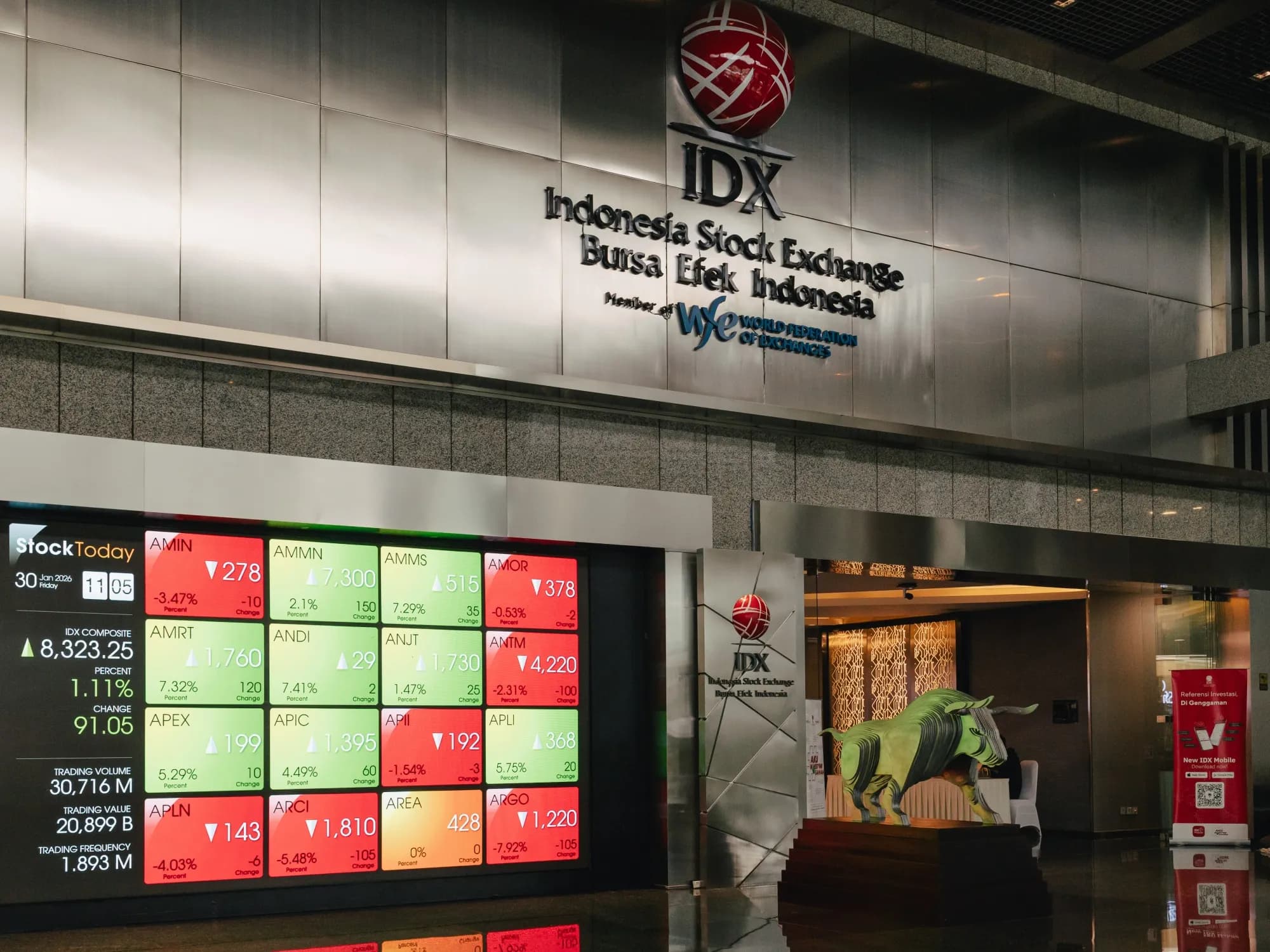
Indonesia's threatened MSCI downgrade is not just a story about index weightings and foreign fund flows, it is also a story about how some of the country's wealthiest tycoons have long inflated the value of their own listed companies. Since MSCI first warned in January that Indonesia's equity market could be downgraded, the country's richest individuals have collectively lost an estimated $57 billion as the selloff that followed turned into, at one point, the worst two-day rout the market had seen in nearly three decades.
A nearly 5,000% rally that drew scrutiny
One case that has drawn particular attention involved an obscure, small-cap maker of an Asian delicacy product, whose share price rallied by close to 5,000% over roughly seven weeks before a research report flagged the move as implausible. A rally of that size, in that short a window, for a company with no obvious change in its underlying business, is the kind of pattern that points toward manipulated trading rather than genuine investor enthusiasm.
A practice common enough to have its own name
What makes Indonesia's situation distinct is how normalized this kind of stock manipulation has become. Traders in the market use the term 'gorengan,' Indonesian for something fried, or 'deep-fried stocks' in English, to describe small, thinly traded shares whose prices are artificially pumped, usually through wash trading, where related parties trade a stock back and forth to manufacture the appearance of volume and rising demand. That the market has its own established slang for this behavior suggests it has been tolerated, or at least widely understood, for far longer than this year's crisis has been unfolding.