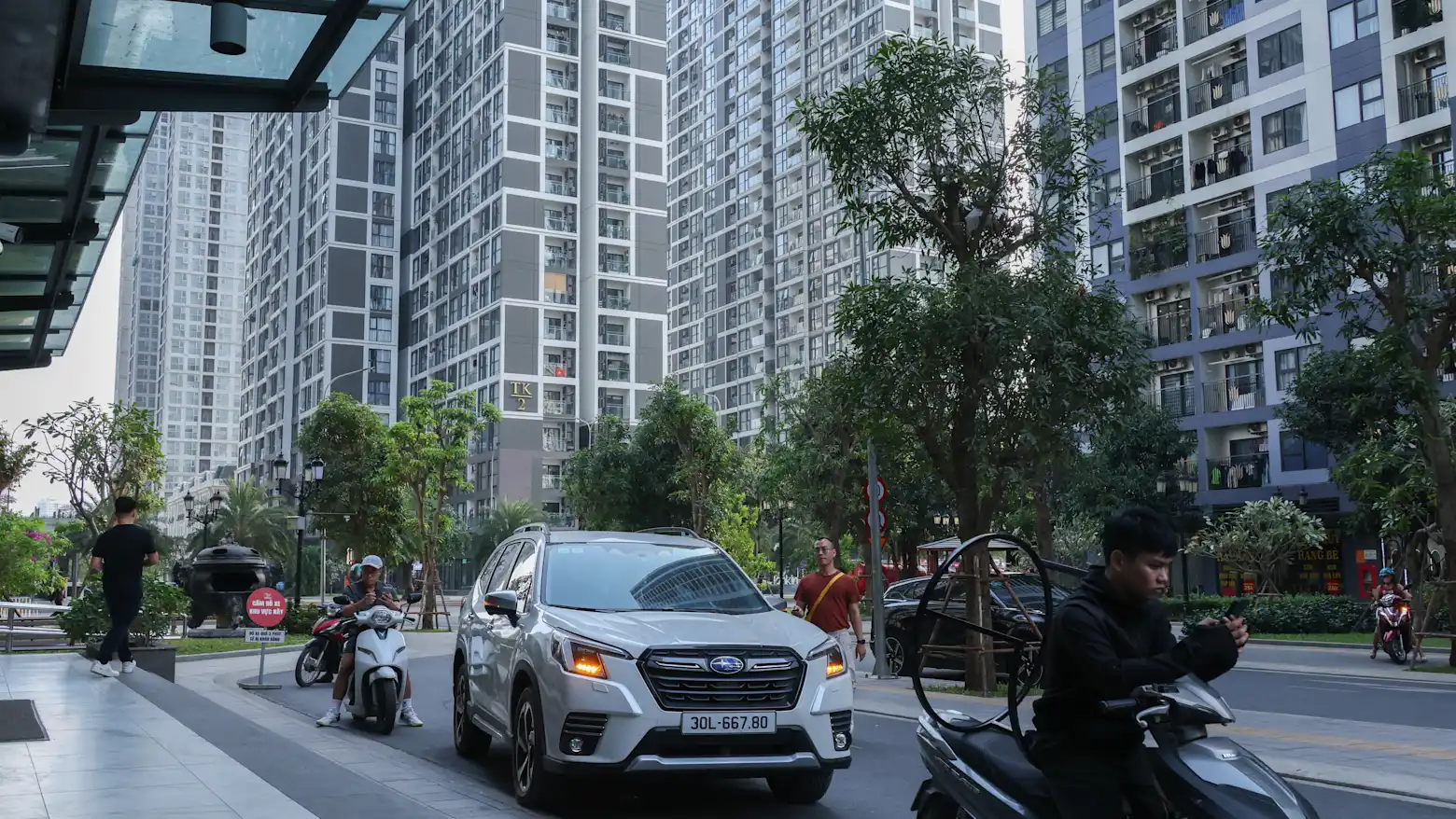
Vietnam's property market cooled to its slowest sales pace since 2021 in the third quarter, according to data from real estate services firm Savills, as years of rapid price gains finally caught up with buyer demand. The slowdown is most visible in Hanoi, where primary apartment prices have risen nearly two and a half times between 2021 and 2025, a run-up steep enough that it has started working against the market's own momentum.
When price gains become a drag on sales
For several years, rising prices in Hanoi were themselves a selling point, drawing in buyers and investors betting that values would keep climbing. That dynamic appears to be breaking down. With prices now roughly two and a half times their 2021 level, a growing share of would-be buyers can no longer stretch far enough to close a purchase, turning what was a tailwind for the market into a ceiling on how many transactions can actually get done.
Borrowing costs add to the squeeze
Rising borrowing costs are compounding the affordability problem. Even buyers who could manage the sticker price of an apartment a few years ago are now facing a materially higher cost of financing that purchase, a combination that has pushed monthly payments on a typical mortgage well beyond what many middle-income households can absorb. The result is a market where listed prices keep climbing even as the pool of buyers able to act on them keeps shrinking.