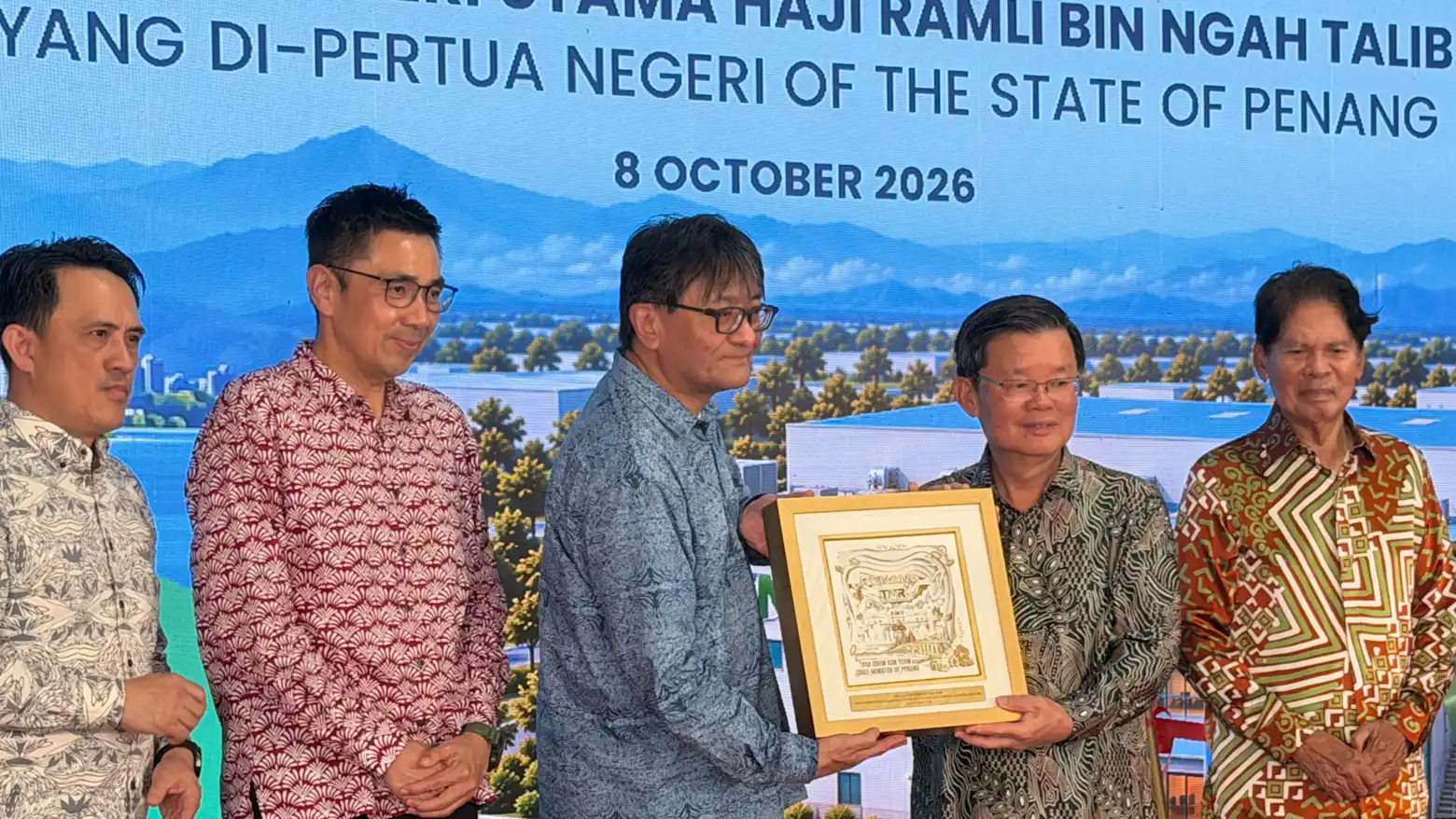
Japan's Tanaka Precious Metal Group marked a milestone on October 8 for a new precious-metals recycling plant in Penang, Malaysia, with a ceremony attended by Penang's Chief Minister, Chow Kon Yeow, and the state's Yang di-Pertua Negeri, Tun Haji Ramli bin Ngah Talib. The facility, operated through a joint venture called Tanaka MEP Refinery, is designed to recover gold and other precious metals from scrap generated during semiconductor and electronic component manufacturing, with an eye toward feeding that recovered material back into the chipmaking supply chain. The plant is targeting an operational start in April 2029.
Why Penang makes sense for this
Penang has spent decades building itself into one of Southeast Asia's most important semiconductor and electronics manufacturing hubs, hosting assembly, testing, and packaging operations for some of the industry's biggest names. A recycling plant that depends on a steady stream of manufacturing scrap containing precious metals needs to sit close to where that scrap is actually generated, which makes Penang a natural location rather than a coincidental one. The move also extends the state's role in the chip supply chain beyond assembly and testing into the materials recovery side of the business.
Gold's quiet but essential role in chips
Gold shows up in semiconductor manufacturing in less visible but important ways, used in bonding wires and connectors that require a metal combining strong conductivity with resistance to corrosion. Recovering that gold from manufacturing scrap, rather than relying solely on freshly mined supply, gives chipmakers an additional, more geographically convenient source of a material that otherwise has to move through longer global mining and refining supply chains. For an industry that has spent recent years increasingly focused on supply chain resilience, a dedicated regional recycling source is a meaningful, if unglamorous, piece of that puzzle.