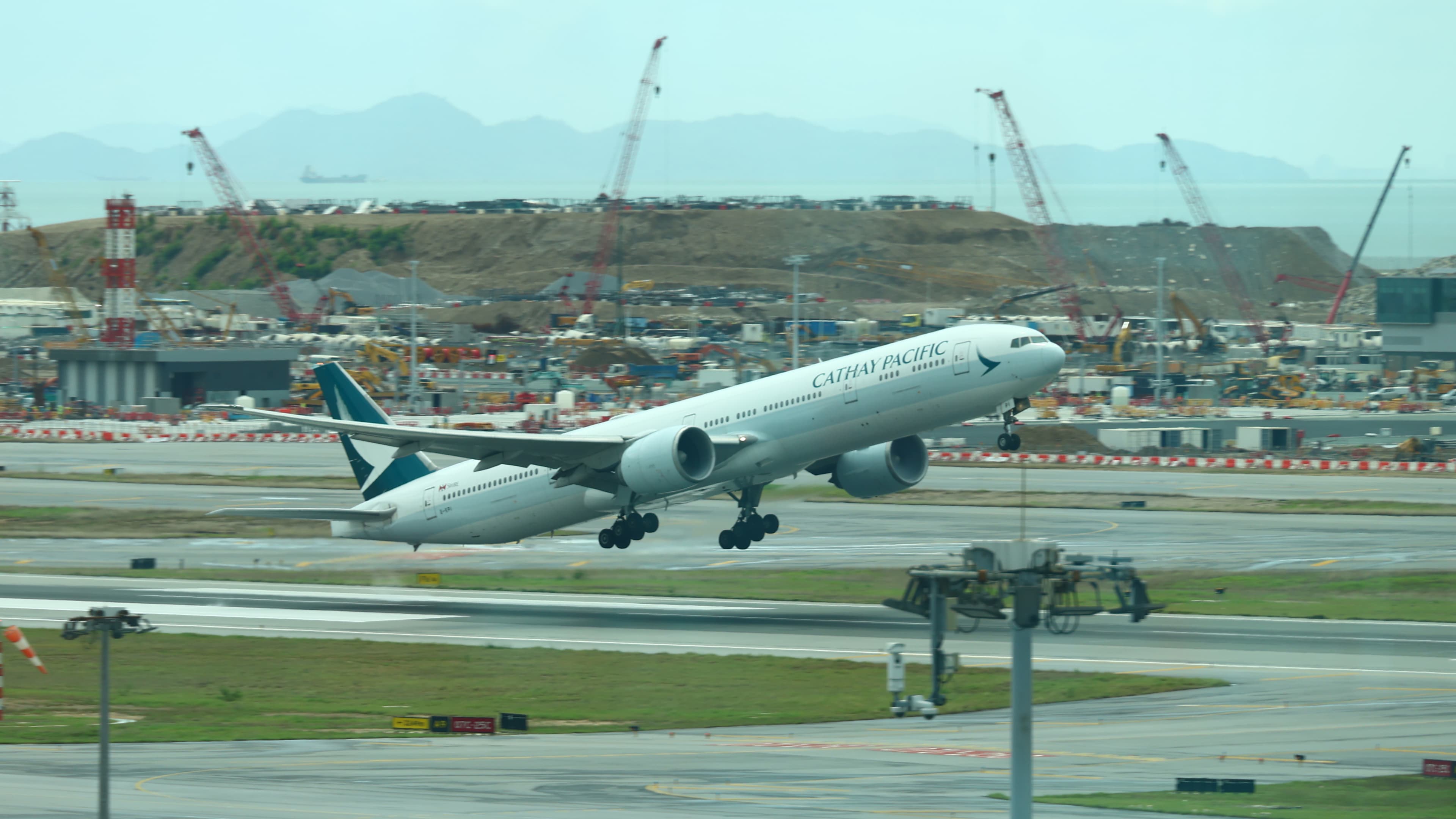
Cathay Pacific told the market this week that its profit for the first six months of 2026 likely climbed by more than 60 percent, and could rise as much as 75 percent to around 6.5 billion Hong Kong dollars, roughly 829 million US dollars, from 3.7 billion a year earlier. In the same window, China's three big state-owned airlines are bracing to report a combined loss somewhere between 7.4 billion and 9 billion yuan. The two results came out of the same skies.
That is what makes the contrast worth dwelling on. Both Cathay and the mainland carriers faced a second quarter in which average jet fuel prices leapt about 90 percent from a year earlier, and both operate in the shadow of a Middle East war that has scrambled long-haul routes across Asia. One side turned that environment into a profit surge. The other side is drowning in it. The difference is not weather or fortune, it is where each airline sits on the map.
How a war becomes a tailwind
When conflict closes or complicates airspace over the Middle East, traffic does not vanish, it reroutes. Passengers and freight that once flowed through the region get pushed onto alternative paths, and a well-placed hub can scoop up the diverted demand. Hong Kong, sitting at the crossroads of East Asian and long-haul traffic, is exactly such a hub, and Cathay has been positioned to catch what the turmoil sent its way.
The numbers underneath the profit tell that story. Cathay carried 17.5 percent more passengers in the first half than a year earlier, and its revenue passenger kilometers, a measure of how far those paying travelers actually flew, rose 15.3 percent. Demand at that strength is what lets an airline absorb a brutal fuel bill and still come out ahead. Full planes forgive expensive kerosene in a way that half-empty ones never can.
Why the mainland carriers are on the other side
China's Air China, China Eastern, and China Southern went into the same fuel spike without the same demand cushion. Their networks lean more heavily on routes and markets that have not recovered with the same vigor, and their exposure to the disrupted corridors has been a cost rather than a windfall. When fuel jumps 90 percent and traffic does not surge to match, the arithmetic turns punishing fast, and a quarterly loss above 12 billion yuan across the three is the result.
It is a reminder that in aviation, the fuel price is a shared shock but the ability to withstand it is not. Two carriers can pay the same for a barrel and see opposite outcomes, because what decides survival is whether the route map is pointed at demand that is rising or demand that is flat. Cathay's map was pointed the right way this half. The Big Three's was not.