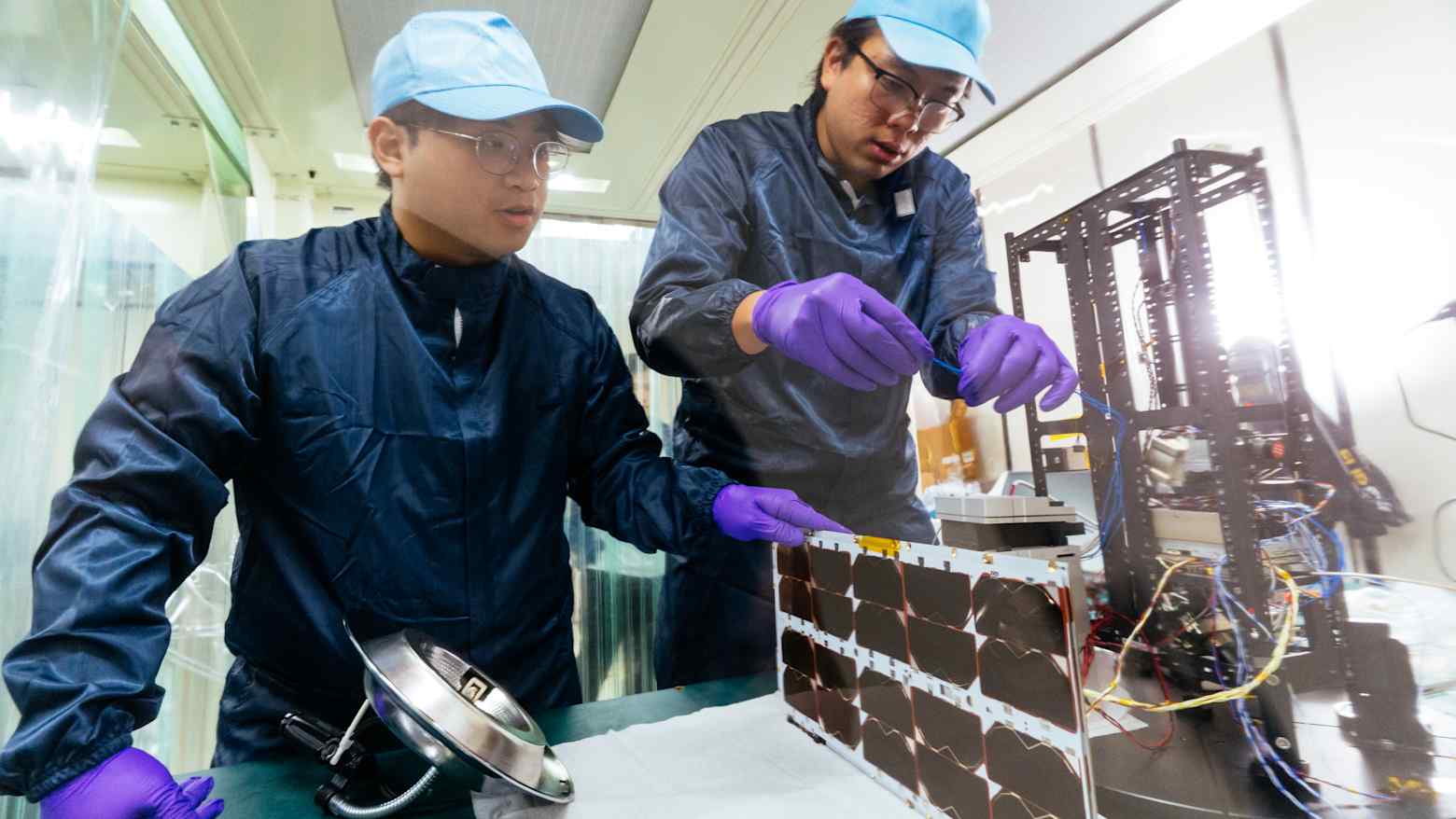
In a cleanroom at National Central University in Taoyuan, technicians are assembling CubeSats, the small modular satellites that have become the entry ticket to the modern space business. The work is being done by Pyras Technology, one of a growing number of Taiwanese suppliers deciding that the next phase of growth lies not in another smartphone or laptop component but in hardware built to survive orbit. For an industry synonymous with consumer gadgets, it is a deliberate change of altitude.
The motivation starts with math. Taiwan's technology manufacturers have spent decades perfecting the art of making electronics at scale, but the consumer market they serve is crowded and slow growing, with margins ground thin by relentless competition. Space offers the opposite profile, a young and expanding market where precision, reliability, and supply chain depth are rewarded rather than commoditized. Satellites, the computers that run them, and the optics they carry are exactly the kind of demanding, high value hardware Taiwan is built to produce.
Turning a gadget supply chain skyward
The pivot plays to genuine strengths. The same ecosystem that churns out circuit boards, sensors, precision optics, and ruggedized components for phones and cars maps neatly onto the bill of materials for a small satellite. A company that already knows how to make a camera module or a power system reliable and cheap has a head start on making one that can withstand launch and the harsh environment beyond it. The leap from consumer electronics to space hardware is real, but for these firms it is a step across, not a leap into the dark.
CubeSats are the natural on ramp. Because they are small, standardized, and comparatively cheap to build and launch, they let a supplier prove its parts in orbit without betting the company on a single giant spacecraft. That lowers the barrier for newcomers like Pyras and gives Taiwan's component makers a way to climb the learning curve incrementally, winning a place in one satellite program before pitching for larger and more lucrative ones.
The strategic layer beneath the business case
There is more than commercial logic at work. Taiwan has watched the strategic value of resilient satellite communications rise sharply, driven home by conflicts elsewhere in which orbiting networks kept armies and civilians connected when ground infrastructure failed. For an island whose links to the outside world run largely through a small number of undersea cables, the ability to build and field its own space based communications is a matter of security, not just enterprise, and that gives the government reason to nurture a domestic supply chain.
That dual purpose changes the economics for suppliers. When a technology serves both a growing commercial market and a national resilience goal, it tends to attract policy support, research partnerships, and patient funding of the sort that pure consumer electronics rarely enjoys. A component maker moving into space is not only chasing a new customer base, it is aligning itself with a priority its own government has every incentive to back.
Why Southeast Asia should take note
For the region, Taiwan's move is a useful case study in industrial reinvention. Southeast Asian economies have spent years trying to climb from assembly and low margin manufacturing into higher value work, and the space sector is one of the frontiers where that climb is now happening across Asia. Watching how Taiwan converts an existing electronics base into satellite capability offers a template, and a warning, for any regional government hoping its own manufacturers can move up the value chain rather than stay stuck at its base.
There is also a supply chain angle that touches the region directly. As satellite constellations multiply and the space economy grows, demand for reliable, affordable components will spread, and the manufacturers that get in early will shape where that work is done. Southeast Asian firms that plug into these emerging space supply chains, whether as parts makers, assemblers, or ground station operators, could ride the same wave. Taiwan is showing what it looks like to see a saturated market clearly and decide the next growth story is somewhere higher up.